
Lexington Resident Lookup Record Paths
There is no official combined list of Lexington residents. The useful first source changes with the question. The town’s Vision assessor database and MapGeo viewer connect a parcel to assessment data, while the Middlesex South Registry connects recorded parties to a document. Those are property associations, not proof that every named party occupies the property. Court, vital, voter, and license systems each answer different, more limited questions.
| Record | What It Confirms | Where | Access |
|---|---|---|---|
| Vision or MapGeo parcel | Owner line, situs, mailing or care-of field, parcel identifiers | Lexington Assessor and GIS | Free annual snapshot and map layers |
| Recorded land | Grantor, grantee, instrument, recorded date, book/page or plan reference | Middlesex South Registry | Online index and images; older routes may be needed |
| Court docket | Party role, case type, status, docket number, and court location | MassCourts and the clerk | Public search varies by case type |
| Vital record | Certified event facts when the requester qualifies | Town Clerk, RVRS, or State Archives | Request and eligibility system |
| Voter status | A voter’s own registration status | Secretary of the Commonwealth | Individual-use form, not a directory |
For an address-first check, preserve the exact street number, unit, ZIP, Vision ID, map ID, and snapshot year before opening a deed. For a name-first check, begin with recorded-land party variants and compare the legal description with the parcel card. A historical name belongs in selected directories, newspapers, town reports, and archives, each labeled with its year. This Lexington resident lookup approach leaves the source type visible instead of collapsing different records into one claim.
For a stronger Lexington result, use the three-record confidence test: pair an address or parcel record with a second, independent source, then add a date or version marker. The second source might be a historic directory, court docket, corporate filing, newspaper image, or qualifying municipal record. If the sources disagree, keep both statements with their dates. A newer deed may explain an older assessor snapshot, while an old directory may document a household without describing the property today.
Check Lexington Names in MassCourts
Lexington’s local district route is the Concord Division of the Massachusetts District Court. A statewide MassCourts search also reaches relevant Middlesex Superior and Probate and Family Court matters. Civil name searching requires first and last names and is stronger than remote criminal name searching, which is generally limited by case number. A docket is a case index, not the entire file. Compare the division, role, filing date, and case type before deciding a result concerns the same person.
The assigned MassCourts screen shows the public entry point used before selecting a court department and search tab.
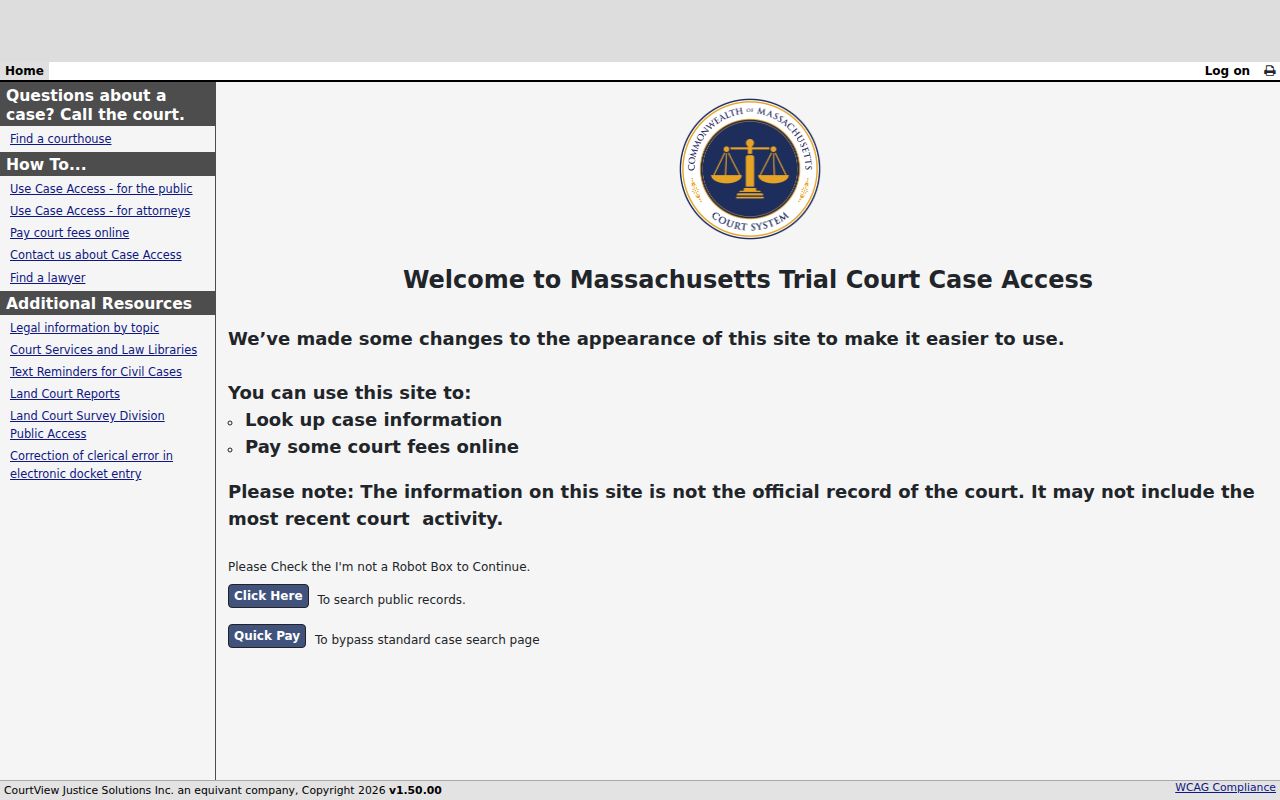
Choose the court before narrowing a civil search, because Concord District, Middlesex Superior, and Probate divisions answer different questions for a Lexington name.
| MassCourts field | Use for a Lexington search | Format or limit |
|---|---|---|
| Court Department and Division | Select the court system and relevant division | Required before dependent options appear |
| Name tab | Search a civil party | Last name needs two characters; first name needs one |
| Party Type | Separate plaintiff, defendant, trustee, and other roles | Optional multi-select |
| Case Type and Status | Narrow a broad name result | Portal-defined selections |
| Date ranges | Limit DOB, death, or file-date searches where available | Case-type windows cannot exceed one month |
| Case Number tab | Retrieve an identified docket | Exact capitalization, spacing, and leading zeros matter |
A result screen records the court, parties, docket number, filing date, selected status and type, result count, and pagination. Official hard-copy material remains with the Clerk, Register, or Recorder when remote access does not supply the needed document. Sealed, impounded, juvenile, adoption, and protected information are not ordinary public lookup material.
Verify a Lexington Resident Across Records
A reliable Lexington resident lookup uses independent record classes and a date marker. An assessor snapshot can lag a deed recorded later in the year, and a historic directory can reflect a household at one printed date. Keep both facts rather than forcing them into one current-address statement. A deed party may be a trustee, executor, attorney, grantor, or grantee. A mailing or care-of line is not a situs address.
- Start with the exact name or address and record the source date.
- Use Vision and MapGeo to capture the parcel or use the Registry to test name variants and party roles.
- Open the deed image, then compare its legal description, recorded date, and book/page reference with the parcel data.
- Check a separate dated source, such as a MassCourts docket, historic directory, newspaper image, or qualifying record request.
- Ask the custodian for a certified copy only when the record type and eligibility rules permit it.
- Docket
- A court’s indexed case record, usually showing the number, parties, court, dates, and status rather than every filed paper.
- Index and image
- An index helps locate a record. The underlying image or clerk file is the document that should be checked for its actual wording.
- Certified copy
- A copy issued by the record custodian with its official certification, subject to that office’s access rules and fee.
Note: A same-name match needs role, date, record type, and an independent source before it becomes a useful Lexington identification lead.
Lexington Voter Status Has Its Own Limits
The Secretary of the Commonwealth’s voter-status service is for a voter verifying their own status, not for browsing Lexington names. It asks for first and last name, month, day, and year of birth, a five-digit residential ZIP, and agreement to the terms. Do not collect those form inputs or treat a status response as identity proof. For local geography, Lexington’s annual street, precinct, and ZIP list is a published range guide rather than a resident-name register.
The assigned Massachusetts voter lookup screen makes the individual-use fields and agreement step visible.
Lexington has nine precincts, but precinct, ZIP, and voter status should remain separate facts. A move, annual-list date, or confidential registration can explain a mismatch. Confidential voter registration is protected under M.G.L. c.51, §51A and 950 CMR 49. The Town Clerk can answer current register and eligibility questions; it should not be bypassed by trying to infer a protected address from a street-list entry.
Match Lexington Vital Requests to the Era
Vital records are a narrow verification channel, not a public name search. The Lexington Town Clerk holds qualifying local birth, death, and marriage records and publishes online, mail, email-for-pickup, counter, and phone routes. The town lists a $15 certified-copy fee. Statewide custody divides at 1936: the Registry of Vital Records and Statistics handles 1936-present records, while the Massachusetts Archives holds the 1841-1935 series.
| Lexington-related record route | What to provide | Access point |
|---|---|---|
| Town Clerk local certificate | Event date, name or names, copy count, and contact information | Online, mail, email/pickup, or 1625 Massachusetts Avenue counter |
| Archives 1841-1935 application | Event type, subject, town, date or decade, and useful parent clues | Mail or email request; $3 per certificate, up to five |
| FamilySearch 1841-1930 collection | Name, event, place, year, and family relationship fields | Online research images where collection access permits |
| RVRS 1936-present | Record-specific eligibility and route requirements | In person, mail, or online ordering |
The assigned Massachusetts vital-record ordering page shows the official route before a requester selects a certificate process.
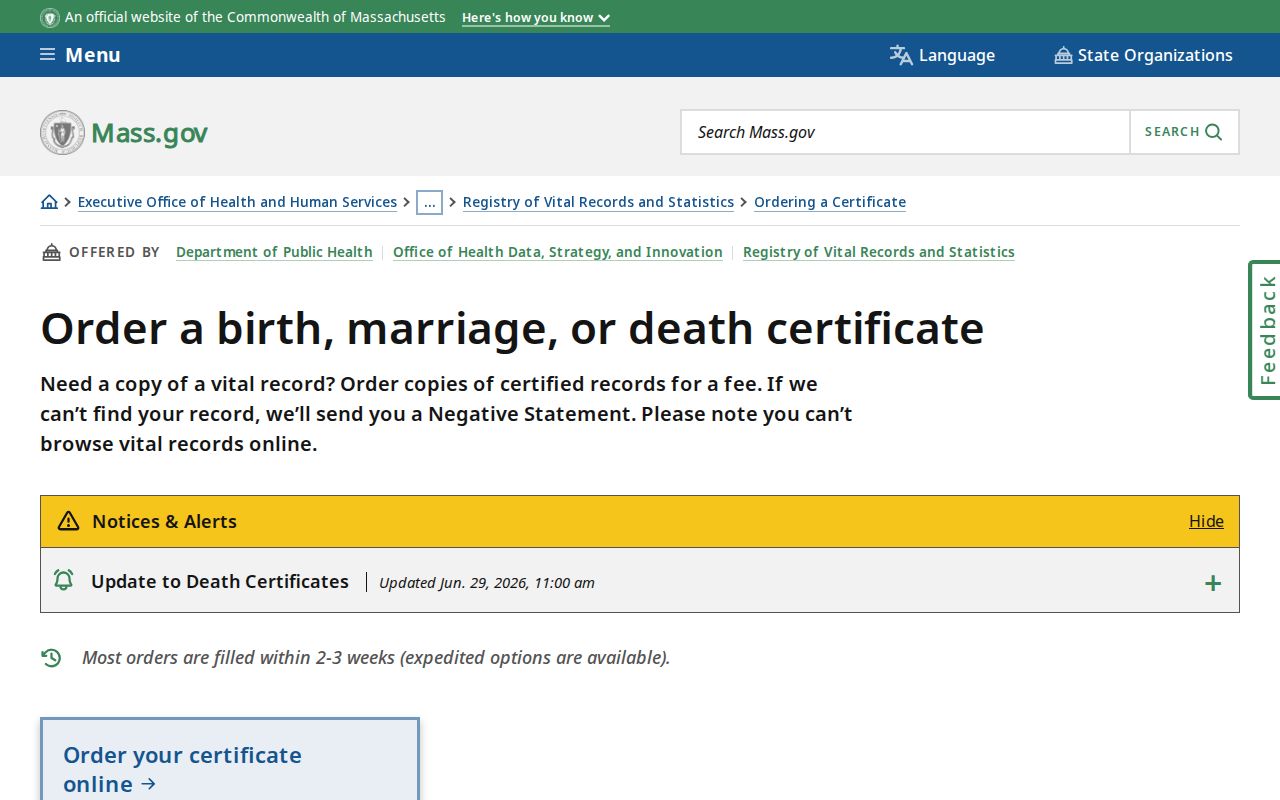
The 1930-1935 Archives transfer may take years to digitize, so a 1931 Lexington event can require a request rather than an online image. From July 1, 2026, the full Social Security number on a death certificate is restricted to a person with legitimate need under M.G.L. c.46, §1.
Use Specialized Lexington Record Searches Carefully
Some official systems answer a specific status question but do not establish residence. The Massachusetts DOL license search separates person and business searches and can use name, city, state, ZIP, board, license type, or license number. The Corporations Division can search entity and officer filings. A business, license, principal office, or registered-agent address must be labeled as an organizational connection, not a home address.
The assigned Massachusetts Sex Offender Registry Board information page explains that public search availability depends on classification and that Level 2 or 3 information can also be requested through local police.
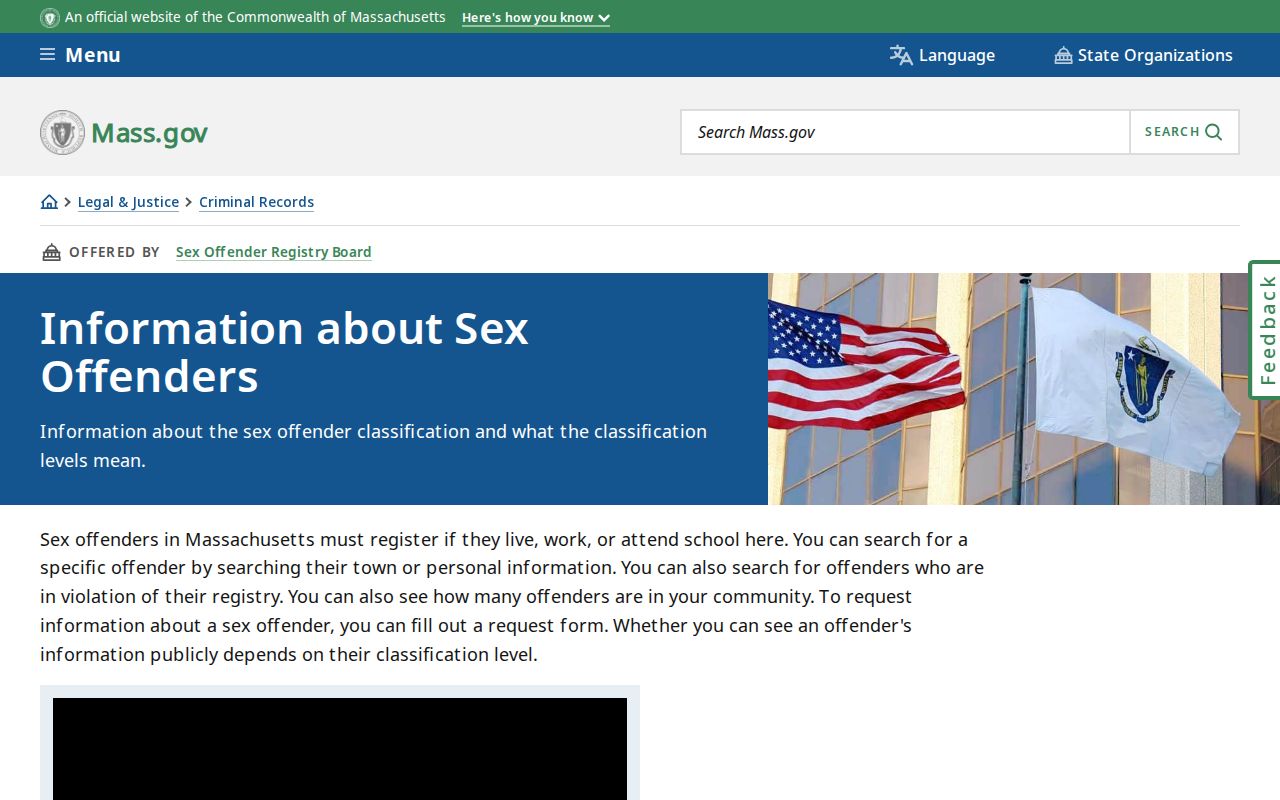
A registry result is governed by its own public-access rules and classification limits. It should never be enlarged into a general Lexington resident lookup or used to target, contact, or accuse someone.
Route Lexington Requests by Custodian
When an online result is incomplete, ask the office that holds the record rather than requesting a broad name search. Lexington receives public-records requests through OpenGov, mail, email, or in person under M.G.L. c.66, §10. The request should identify an existing series, such as an assessor card, a Town Clerk record, a police report, a permit file, or a particular date range. A custodian does not have to create a new compilation of residents, and protected information may be redacted.
| Question after a Lexington lookup | First record custodian | Useful fallback |
|---|---|---|
| Was a document recorded against a parcel? | Middlesex South Registry of Deeds | Registry image, book/page route, or older office pathway |
| Does a case file contain public material? | Relevant court clerk, register, or recorder | Clerk counter or public terminal for older or non-remote material |
| Is a local vital record available? | Lexington Town Clerk | RVRS or Massachusetts Archives, depending on the event year |
| Is an older town record online? | Department holding the series | Narrow OpenGov request, mail, email, or in-person inquiry |
Electronic production is preferred when a record is available that way. Lexington guidance says ordinary paper copies are generally capped at $0.05 per page unless another statute or regulation applies, while permitted search, redaction, or reproduction costs can still matter for a large request. Give the street, parcel, document type, date span, and preferred format. That helps the custodian locate an existing Lexington record without turning a request into a demand for a private-person dossier.
Respect Lexington Resident Lookup Protections
Massachusetts access law does not create a right to assemble every public field about a person. The Lexington public-records inventory routes requests through OpenGov, mail, email, or an in-person request under M.G.L. c.66, §10. Ask for an existing, identified record series with a date range. A custodian does not have to create a new resident database. Electronic production is preferred, and ordinary paper copies are generally capped at $0.05 per page unless a different rule applies.
Lawful use. Use Lexington records for personal, lawful research and source verification. Do not use an address, case, or record trail to stalk, harass, intimidate, or harm anyone.
The Address Confidentiality Program offers a substitute address and mail forwarding for eligible survivors and protected health-care participants. Confidential voter registrations, restricted vital records, sealed court material, and redacted personal information must stay protected. For an error, contact the agency, registry, library, or vendor that published the underlying record and identify the exact source, date, URL, and factual issue.
Massachusetts has no one request that removes a person from every public record. A correction or suppression question belongs with the originating custodian and the statute governing that record. Do not send unnecessary identity documents with a request unless the office requires them. A changed or restricted record should be described only by the minimum source detail needed to distinguish it from an older result.
Note: A missing Lexington result can reflect privacy, a dated index, an offline file, or a different custodian rather than a definitive absence.