
Lexington City Directory Holdings
Historical Lexington volumes require a holdings question, not an assumption that every year survives. The Massachusetts State Library directory list identifies selected Lexington material within an 1887 to 1997 holding range. It records specific years including 1890, 1894, 1899, 1902, 1906, 1908, 1913, 1915, 1918, 1922, 1924, 1926, 1928, 1930, 1932, 1934, and 1942. Those are located issues, not proof of an annual run. The Lexington Town Directory archive record identifies local years from 1894 through 1938, while the federal directory aid identifies Lexington volumes for 1930, 1932, and 1934.
Use the collection and its date as the claim’s boundary. An annual directory volume can support a name-and-address appearance in that edition. It cannot, by itself, prove ownership, a full household, or continuous residence between two editions.
| Collection | Years | Where Held | Access |
|---|---|---|---|
| Massachusetts State Library city and town directories | Selected issues within 1887-1997 | State Library catalog and reading room | Check the catalog and directory-list PDF for each issue |
| Lexington Town Directory catalog record | 1894-1938 | Lexington Town Archives record | Catalog lead; verify individual holdings before relying on a year |
| NARA directory reference set | 1930, 1932, 1934 | National Archives directory aid | Reference confirmation for those Lexington years |
| FamilySearch city and business directories | About 1749-1990, varying by item | Digital collection | Name, residence, and year-style filters; image availability varies |
For material that is not on an open web result, the fallback chain is the State Library catalog, Cary Memorial Library staff, Town Archives, and the Lexington History Museums research process. Note: a catalog date range describes holdings, not a promise of an edition for every year in that range.
Lexington Directory Shelves and Archives
The Lexington Heritage portal is the practical hub for local work because it connects Cary Memorial Library, Town Archives, and Lexington History Museums. Cary’s Lexington Collection includes town reports, histories, yearbooks, family histories, voting lists, street directories, newspapers, and vertical files. The Worthen Collection adds roughly 500 books along with manuscripts, maps, photographs, correspondence, research notes, and other material about properties, schools, organizations, businesses, and town government.
A blank catalog result at one repository should not end the search. The three repositories hold different formats and use different descriptions. Cary’s house-history resources point to its Cary Research System, a neighborhood map, Town Archives material, and the local home-history guide. Town Archives holdings may reach back to 1729 for some property and town-history questions. The museum archive is useful when a directory line needs a primary photograph, manuscript, or organizational record for context.
For a visual route into those holdings, consult Lexington History Museums research services before requesting material.
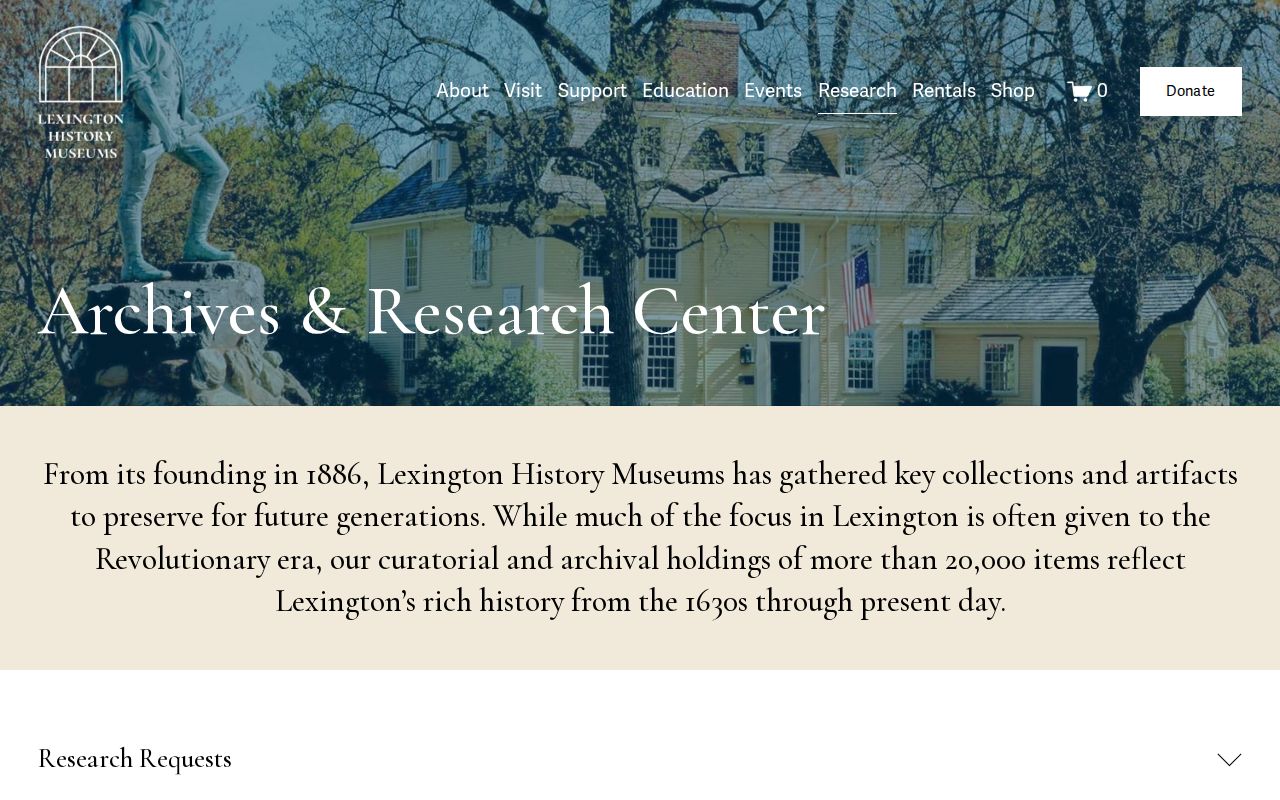
Its archive has more than 20,000 items from the seventeenth century to the present. Requests generally take about three weeks, appointments should be arranged ahead, and staff retrieves physical material under reading-room rules.
Use Cary Memorial Library’s house-history guide when a directory address needs to be connected with local maps, archive materials, or the Cary Research System.
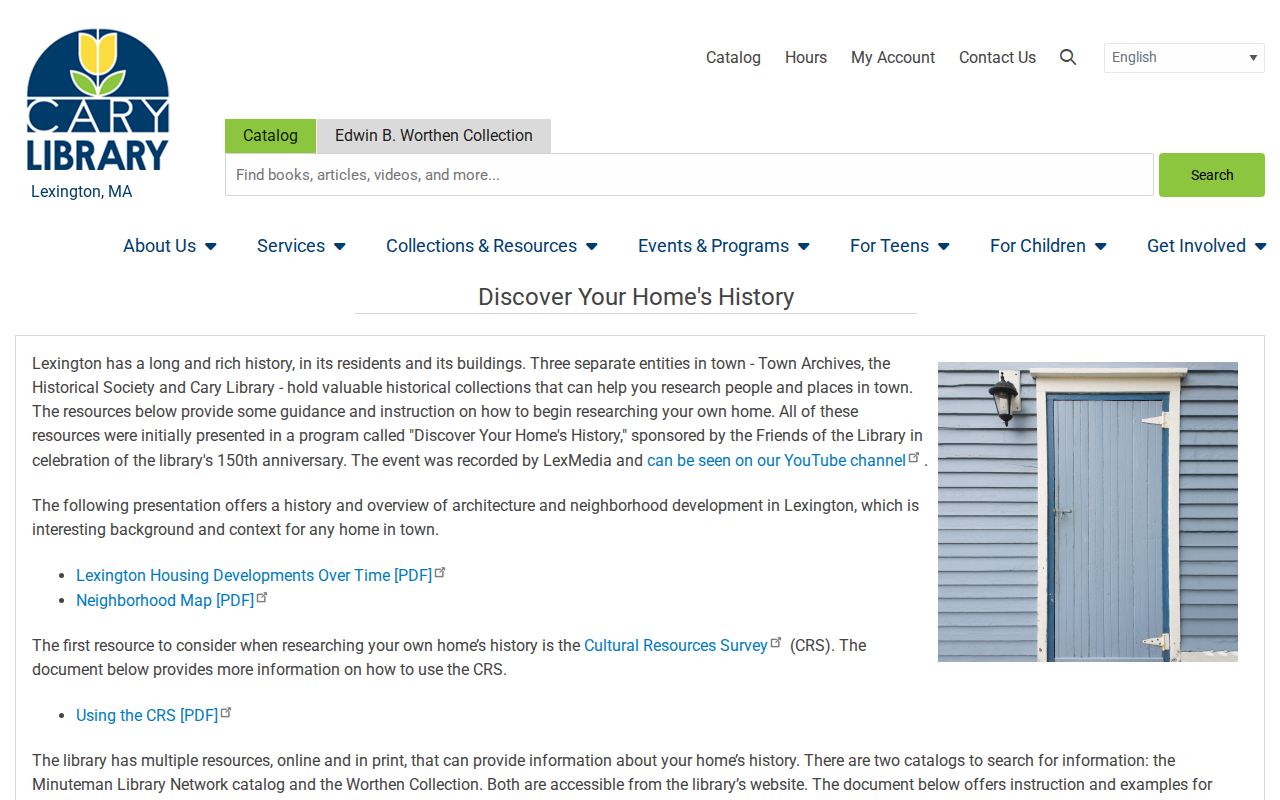
The Cary route links library and Town Archives resources with Lexington History Museums material, making it useful for checking a dated directory entry against property and neighborhood context without treating the entry as proof of ownership.
Lexington Directory Clues in Newspapers
Digitized newspapers often fill the space between directory issues. The Lexington newspaper portal carries the Lexington Minute-Men from 1871 to 1975, plus several shorter Lexington titles published between 1905 and 1933. Search a surname with a street name, then inspect the page image rather than trusting the OCR alone. Initials, house numbers, and Massachusetts Avenue are especially prone to recognition errors.
Open the digitized Lexington newspapers collection when an address needs a date-specific newspaper lead.
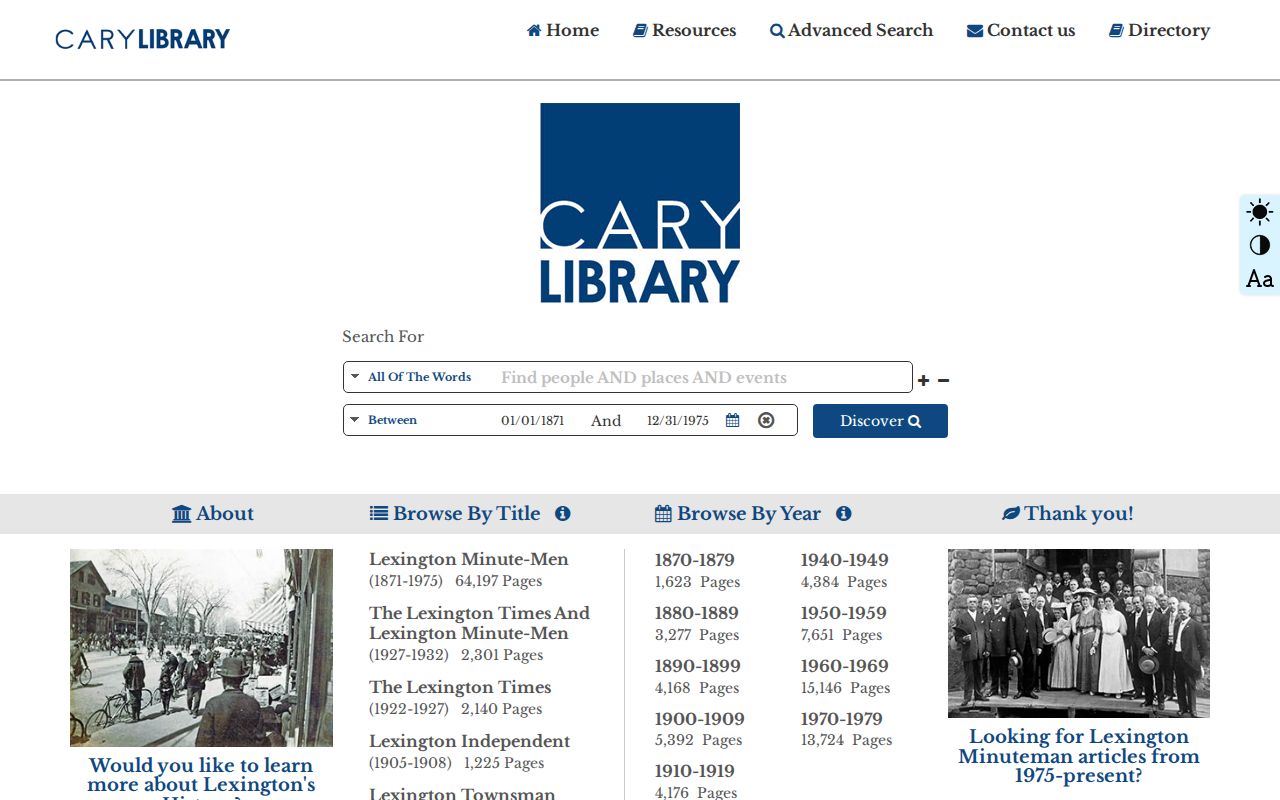
The portal searches people, places, and events, but an obituary, civic notice, or advertisement remains a discovery record. Cite the title, date, and page, then verify a formal fact through the record custodian when one exists.
The later newspaper route changes. The research record identifies 1975 to 2005 material as a librarian-request route and notes that 2005-present access runs through Cary subscription or news resources. That division matters when a historical address search reaches a recent address or organization.
How Lexington City Directory Entries Read
A historical Lexington volume usually needs to be read in both directions. The alphabetical portion can connect a listed person with a street or house-guide address for a dated edition. The address-oriented portion may show who was associated with a location that year. Businesses and advertisements add local context. The research did not establish one standard publisher layout or a verified sample Lexington entry, so symbols and abbreviations must be taken from the key printed in the particular volume.
| Name | Record the spelling exactly, including initials, punctuation, and any suffix. |
|---|---|
| Address or residence | Capture the printed street form and house number, then compare it with the period’s map or street source. |
| Occupation or business wording | Treat it as a dated directory field, not a current-status statement. |
| House guide placement | Check whether the address-oriented section places a household or business at the number in that edition. |
| Volume details | Keep the title, year, repository, and page beside every transcription. |
Without the volume’s own key, do not guess that a mark denotes ownership, marital status, or a particular household role. A label might be an editorial convention, an advertising category, or a local index device.
Lexington City Directory Terms Decoded
Three small distinctions keep a historic-directory search accurate. They also prevent a house guide from being treated as a deed record or a current resident list.
- Criss-cross directory
- An address-ordered directory section. It is useful for a period location, but its availability and format depend on the volume.
- Householder index
- An index organized around a house or address. It can identify a dated entry without establishing a complete household.
- Abbreviation key
- The explanatory list printed by a publisher or compiler. Photograph or transcribe it before interpreting shorthand.
- Original custodian
- The library, archive, or institution responsible for the collection, even when a scan is delivered through another service.
Preserve the source layer as well. A scan may come through FamilySearch, while a catalog record identifies the library that holds the volume. Newspaper OCR is a delivery tool, and the issue page is the source to cite. Note: wording copied from a directory should retain its year and page so later researchers can check the original.
Lexington Historical Source Timeline
Lexington’s historical record trail has distinct periods. A short timeline helps place a directory beside the records that can confirm or qualify it.
- 1729 onward: Town Archives material can support some property and town-history questions before modern directory practice.
- 1857: the town’s street-naming report preserves a source for older street names and spellings.
- 1894-1938: the Town Archives catalog identifies Lexington Town Directory years in this span.
- 1930, 1932, and 1934: NARA’s directory aid specifically identifies Lexington volumes for these census-era years.
- 1871-1975: the Minute-Men run supplies newspaper context across many directory gaps.
Street names should not be silently modernized. Compare a historical form with the 1857 report, historic maps, and the edition’s own wording. The town’s current identity does not make a historical street label interchangeable with a modern one.
Following Lexington City Directory Households
Trace a household through Lexington directory volumes as a sequence of dated observations. Start with the earliest confirmed appearance, record the spelling and address exactly, then move forward only to the next volume actually located. A disappearance may indicate a move, a name variation, an omitted issue, or a different editorial choice. It is not proof that a person died or left town. Pair a directory observation with a census year, a town record, a cemetery source, or a recorded deed when the question calls for confirmation.
- Find the first verified entry and log its title, year, page, and repository.
- Check the same edition’s address-oriented material, if present, for the printed address context.
- Compare the next located directory year, preserving each spelling and street variation.
- Pair the dated sequence with the appropriate census era, newspaper image, or local archival material.
- Use a vital, cemetery, probate, or deed source only for the distinct fact that source can support.
The State Library genealogy guide, Cary collections, and the Town Archives offer different routes when a surname crosses city limits or a volume is absent. For a final identification, retain both supporting and negative searches in the research notes.
Lexington Historical Access Paths
Online access is useful, but it is not the only path. FamilySearch offers name, residence, place, and year-style filters for its city and business directory collection, with access varying by item and account permissions. The State Library directory list points to catalog and reading-room work. Cary supplies local-history resources and staff routing. Lexington History Museums offers a request process for archival material, while the newspaper portal makes many historical issues searchable by page image.
If a targeted item is missing online, ask the custodian for the title, year, address or surname, and desired format. A precise request works better than a request to locate every person connected with a street. The Town Clerk receives Massachusetts Public Records Law requests through OpenGov, mail, email, or in person for town-held records, but libraries and museums use their own collection-access procedures. State whether a scan, a physical review, or staff routing is needed.